
Those Black Streaks on Your Roof, Explained
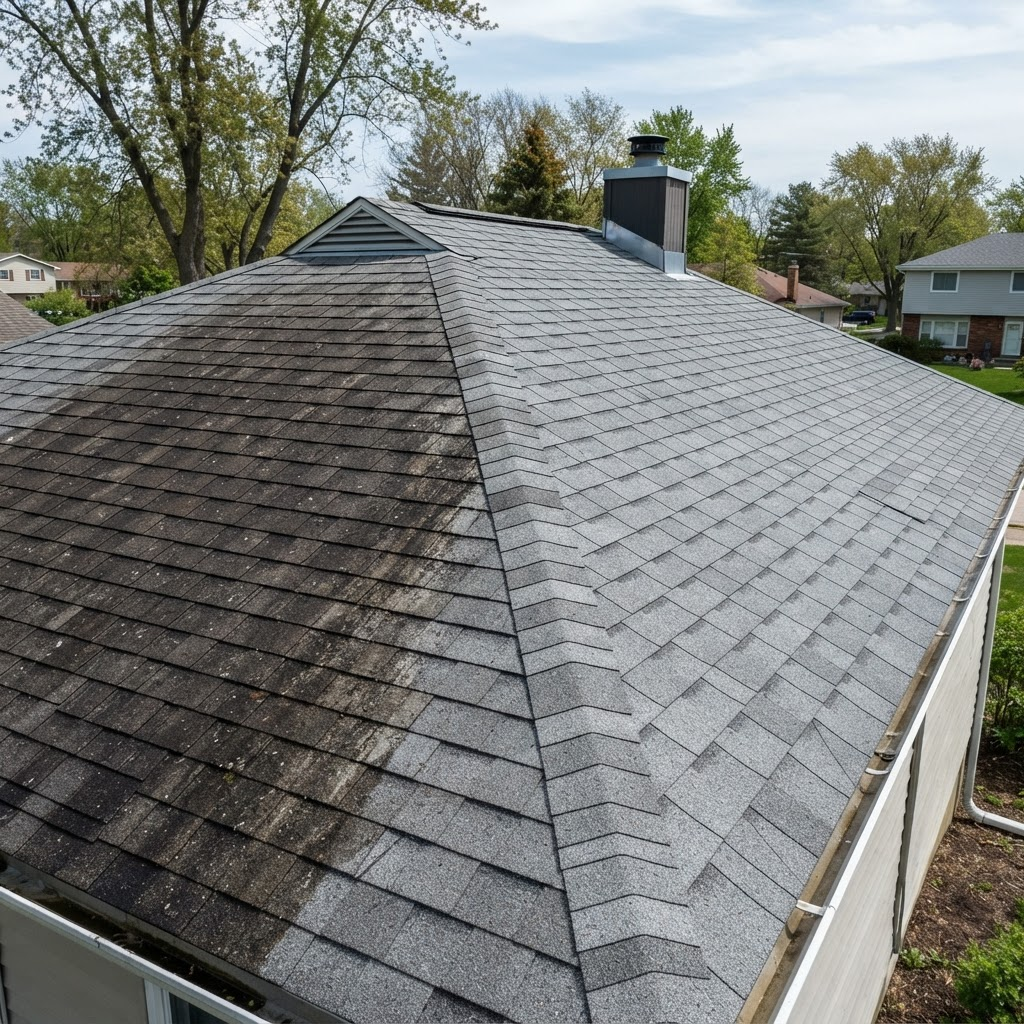
Those unsightly dark streaks running down so many Lowcountry roofs have a specific cause, and understanding it explains why you should never let anyone pressure wash them away.
It's algae, not dirt
The streaks are typically a blue-green algae (often Gleocapsa magma) that feeds on the limestone filler in asphalt shingles. It thrives in humid, warm climates, which describes the Charleston coast perfectly.
Because it's a living organism rather than loose dirt, simply rinsing the roof doesn't get rid of it. You have to treat the algae itself.
Why it shows up where it does
You'll usually see the worst streaking on north-facing slopes and shaded areas that stay damp longer. That extra moisture gives the algae the conditions it needs to spread.
Why not to pressure wash a roof
High pressure can dislodge the protective granules on shingles and force water underneath them, shortening the roof's lifespan. It's one of the most common and costly exterior-cleaning mistakes.
The safe method is a low-pressure soft wash that treats the algae at its source and rinses gently, lifting the streaks without harming the roofing material.
Keeping it from coming back
Trimming back overhanging branches to let more sunlight reach the roof can slow regrowth. Even so, in a humid coastal climate, periodic soft washing is the most reliable way to keep a roof looking clean.